Understanding One of Aviation’s Most Misunderstood Challenges: Robert Sharman Breaks Down Turbulence
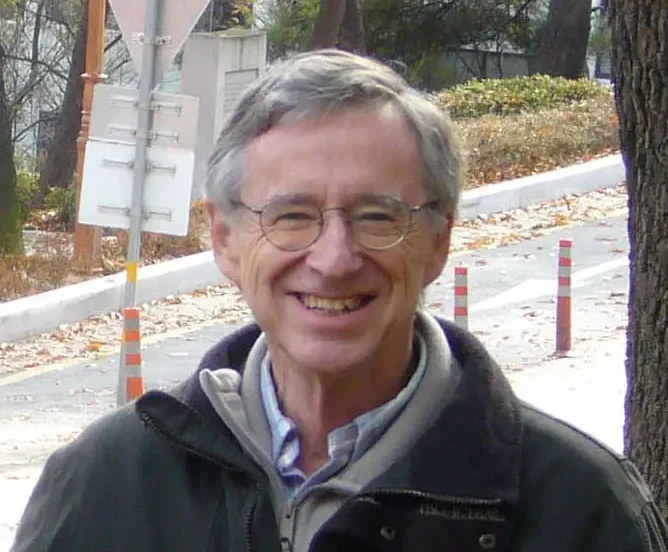
Robert Sharman is a project scientist at the Research Applications Laboratory of the National Center for Atmospheric Research (NCAR), where he leads research into aviation turbulence and atmospheric dynamics. His work focuses on improving the understanding and prediction of turbulence, including clear-air turbulence, through numerical modeling and observation, helping advance systems that enhance flight safety and operational planning. Sharman is an editor and contributor to scientific literature on aviation turbulence processes, detection, and prediction, and his research has influenced forecasting techniques used in the aviation community.
Ethan Romanov: With your expertise in a variety of different types of turbulence, from convective and clear-air to mountain wave turbulence, what is something about turbulence that most pilots or passengers still misunderstand, even with today’s advanced technological forecasting systems?
Robert Sharman: Atmospheric turbulence tends to be patchy and relatively small-scale, regardless of the type of turbulence. Therefore, the onset and duration of a turbulence experience can be sudden and short-lived. This is (or should be) likely to be expected by airline crew and passengers when the aircraft is flying through clouds, but in clear air, it is often unexpected. Turbulence forecasting uncertainties are related to the smallness of turbulence eddies. A typical commercial aircraft mainly responds to turbulence eddies of sizes roughly 100-1000m. These scales are much smaller than weather prediction and turbulence forecasting models, so they are not resolved or predictable. However, the large-scale atmospheric forces that caused the turbulence in the first place are often resolvable, and these patterns can be used to infer turbulence at the smaller scales that an aircraft responds to. Hence, turbulence forecasts must be thought of in probabilistic rather than deterministic terms. This is similar in principle to a tornado watch, where large-scale weather conditions may be favorable for tornadoes, but the exact location and timing of the tornado cannot be predicted.
Ethan Romanov: You mentioned turbulence not only impacts safety but also air traffic efficiency and ATC’s workload. How do you see these advanced turbulence forecasting systems changing the way pilots and controllers communicate and make decisions during flights?
Robert Sharman: Right now, most commercial airlines rely on ground-based dispatchers to access and interpret turbulence forecasts, which they communicate to the pilots either before takeoff or in-flight. This is slowly changing, though, and soon the forecasts will be available to the pilots directly in the cockpit. Some commercial products are already doing that. The same is true for air traffic controllers. They currently do not receive turbulence forecasts in the tower, so they have to rely on radar imagery and reports of turbulence from aircraft in their responsible sector. But this will change in the future as well, with ATC eventually getting direct access to forecast products. These transitions are not as easy as they might seem, since there are procedures to make sure communication products are properly and safely implemented.
Ethan Romanov: The EDR system and NEXRAD Turbulence Detection Algorithm seem like major advancements. How close do you think we are to a future where turbulence can be predicted like thunderstorms or hurricanes can be? Also, do you think that we will ever reach a point where severe turbulence encounters become almost completely avoidable?
Robert Sharman: You’re right, we think these systems, which provide nearly real-time turbulence detection over a large domain, are in fact major advances, and they have been embraced by most major airlines. These detection algorithms provide options for other aircraft to avoid moderate or severe turbulence. That being said, though, turbulence related to thunderstorms can be very difficult to avoid, especially when the thunderstorms are growing rapidly. In rapidly growing thunderstorms, which are common in the spring and summer, regions in clouds that previously had only light turbulence can become severe or even extreme within a matter of a few minutes. I think it will be a few years yet before these situations can be accurately forecasted and avoided.
Ethan Romanov: What advice do you have for the younger generation of students who are interested in entering the aviation industry?
Robert Sharman: I suppose that depends on what aspect of the aviation sector especially interests the student. If one is interested in forecasting (e.g., as a dispatcher or researcher), a background in meteorology is essential. Some university meteorology departments do have specializations in aviation meteorology. On the other hand, if one is interested in advancing the science of turbulence mitigation by altering the response of aircraft to turbulence, then aerospace engineering would be the appropriate field.