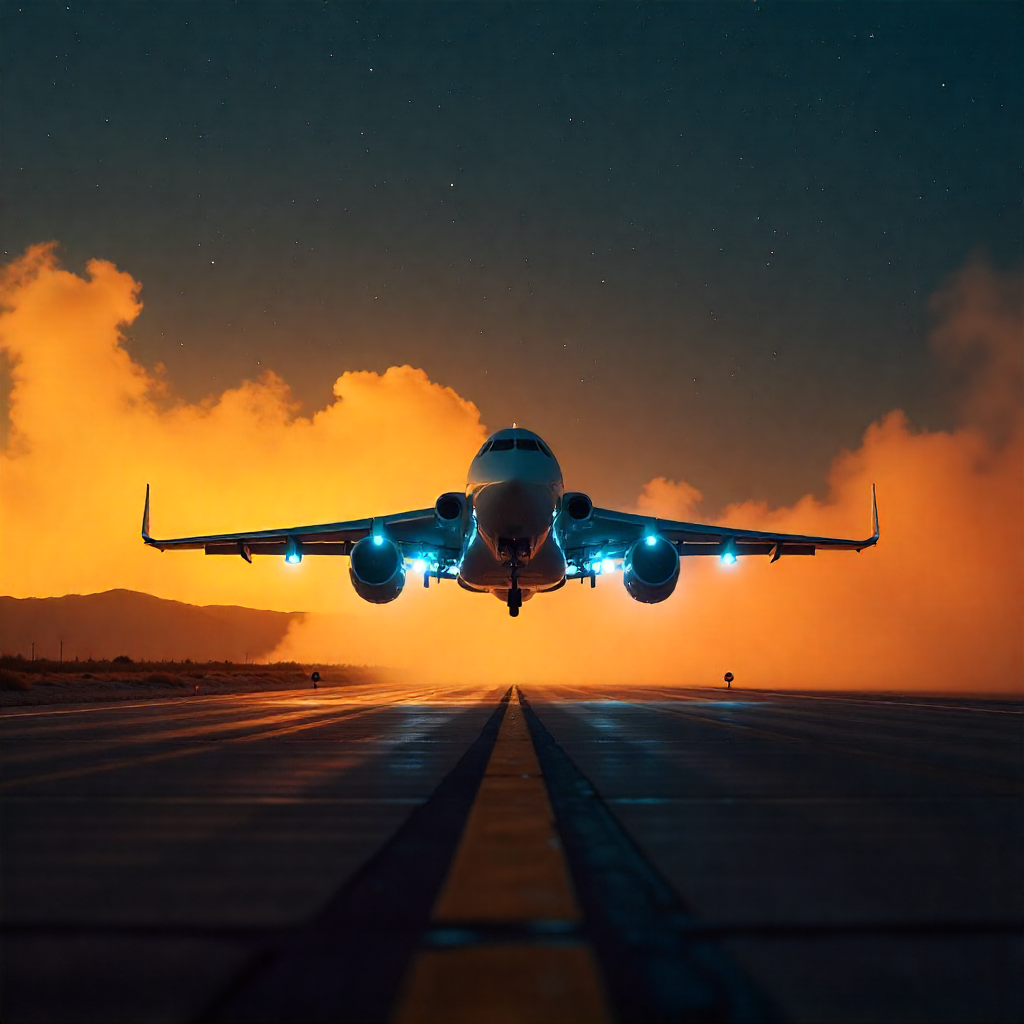
An Unexpected Houston Flight Turbulence Scare: 4,000-Foot Drop in 40 Seconds
Thursday, August 28th. It was an ordinary day with flights running smoothly. Suddenly, the unexpected happened. A flight from Aspen, Colorado, to Houston, Texas, encountered chaos at 39,000 feet in the air. The plane then proceeded to plunge about 4,000 feet in just 40 seconds. All of the passengers were shaken abruptly during the drop, including two people who were injured. Thankfully, the plane was diverted safely to Austin. This marks how fast an uneventful flight can turn into a life-threatening experience.
To begin, the incident occurred on SkyWest flight 5971, which was operated by United Airlines. The plane was carrying 39 passengers and 4 crew members. Around three-quarters into the flight, the aircraft was suddenly struck by severe turbulence. The plane descended roughly 4,300 feet in about 44 seconds. One passenger hit their head against the ceiling 3 times during the incident. Another was trapped in the bathroom. Then, the flight was diverted to Austin-Bergstrom International Airport, where medical teams arrived and treated two passengers for injuries, who were later hospitalized. Thankfully, no one had life-threatening injuries.
Turbulence can be caused by numerous factors. In fact, recently, during Delta Airlines flight 56, an Airbus A330-941 encountered severe turbulence with 246 passengers on board. This was caused by extremely stormy weather conditions, where the pilot was rerouted yet still could not avoid the storms. For the Houston flight, the exact cause is unknown. This incident may have occurred due to either horrific weather conditions or unexpected turbulence caused by climate change. This is seen because turbulence is usually unexpected and without warning. It can even occur when the sky appears to be completely clear. Studies show that the skies are 55% bumpier today than they were 40 years ago. This increase in turbulence is consistent with climate change, as warmer air from carbon dioxide emissions increases windshear in the jet streams. This in turn causes more turbulence, especially when the sky appears to be clear.
Furthermore, I believe that this wasn’t just a scare for passengers, as this is an ongoing issue with a previous history. According to a Research Applications Laboratory article, the number of pilot-reported turbulence encounters is about 65,000/year, and severe pilot turbulence reports are about 5,500/year. In my opinion, this incident exposed once again how vulnerable aircraft are to atmospheric changes. Planes are built to withstand stress from air particles and can be stable with a slight amount of bad weather, but turbulence still remains unpredictable. This is really hard for me to grasp, because nowadays, planes have advanced radar and weather tools, yet sudden air currents can still take over at times. For me, the most interesting part of this scare was how much happens outside of passenger control. It also leads to passengers’ misunderstanding that when a seatbelt sign is off, then the skies are safe. I believe this is false. Turbulence can occur at any moment and can either be minimal or turn dangerously chaotic. Regardless, I think people should take caution at all times because unexpected turbulence can’t be predicted by pilots, let alone passengers.
Moreover, there are several improvements needed to be made in the aviation industry to avoid these problems in the future. One way to minimize turbulence could be to create more efficient turbulence prediction tools that use real-time data in order to help reroute flights and avoid danger. As technology continues to evolve, aviation must keep pace with stronger systems for managing turbulence. Another important rule that should be enforced is stricter seatbelt usage. Passengers should keep their seatbelts on throughout the flight, not just during takeoff and landing, as it would protect passengers during sudden unexpected shifts in flight. However, there is an underlying factor to this enforcement: passengers still need to be able to use the restroom. Therefore, the aviation industry can enforce this protocol with the exception of emergency restroom usages. Lastly, the ongoing increase in turbulence strongly affects airlines, as they already spend $150-500 million yearly on injuries, aircraft damage, flight delays, and time lost for inspection and maintenance, just in the U.S. alone. Ultimately, airlines will have to adapt to varying regulations for turbulence and increase budgeting in order to mitigate the effects of turbulence.
In conclusion, the SkyWest flight headed to Houston showed how fragile airplanes can be against unpredictable forces. All of a sudden, a routine flight turned into a medical emergency, and everyone was frightened. Overall, the aviation industry is built on trust. To preserve this trust, airlines and regulators should be ahead of the curve, not reactive.
Works Cited:
https://people.com/2-skywest-passengers-injured-after-severe-turbulence-11800467?utm_source
https://ral.ucar.edu/aap/turbulence
https://news.agu.org/press-release/hazardous-clear-air-turbulence-up-55-from-1979-study-shows/
https://agupubs.onlinelibrary.wiley.com/doi/10.1029/2023GL103814