
A Deep Dive Into Nuclear Policy in the Modern World: An Interview with Joseph Rodgers
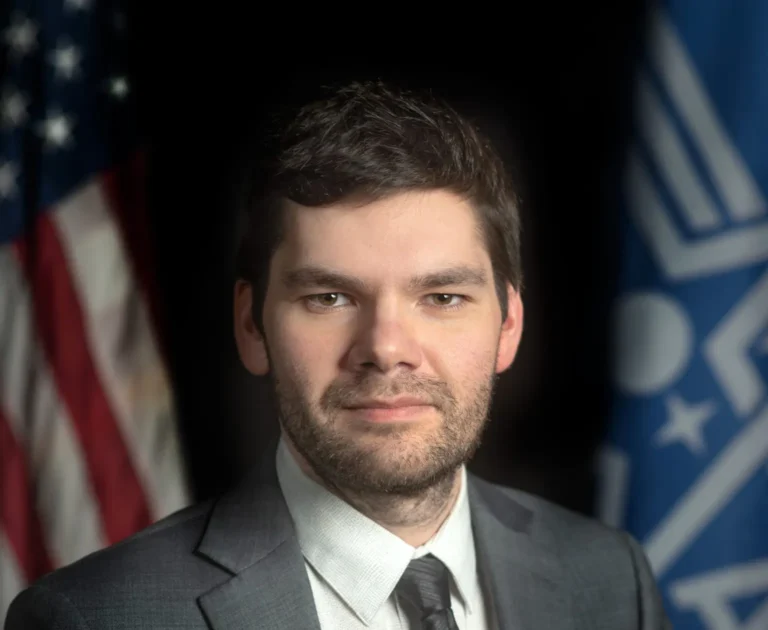
Joseph Rodgers is a rising expert in nuclear policy and nonproliferation, serving as the deputy director and a fellow with the Project on Nuclear Issues at the Center for Strategic and International Studies (CSIS). His work focuses on nuclear modernization, deterrence, and open-source intelligence, helping policymakers understand the risks shaping today’s nuclear landscape. Before CSIS, he conducted research at the James Martin Center for Nonproliferation Studies and worked with the United Nations Institute for Disarmament Research. He holds an MA in Nonproliferation and Terrorism Studies and is currently pursuing a PhD in Biodefense at George Mason University. Today, he is widely recognized for his deep understanding of nuclear security challenges.
Ethan Romanov: The B-2 bomber’s stealth capabilities were extremely significant for the attack of Operation Midnight Hammer. In your opinion, what aspect of the bomber’s stealth mattered the most in this mission?
Joseph Rodgers: So I don’t know that there’s one particular aspect that matters the most, as much as it’s the culmination of a complex series of capabilities that the U.S. brought to bear on the mission. The B-2 does have really significant stealth capabilities. It has material that absorbs radar and reflects radar in very particular directions. So the radar profile of a stealth bomber will absorb radar signatures across the electromagnetic spectrum and redirect them in kind of four or five specific directions off the plane’s wings. And so the flight pattern for a B-2 bomber really matters; it’s really important and significant. They spend a lot of time managing their radar spikes as they plan operations to make sure they’re bouncing radar waves away from anything that would receive signals. So military operators spend a significant amount of time thinking about where their target, in this case, Iran’s radar, would be able to pick up spikes, and they spend a lot of time planning their route to manage where their radar spikes might send signatures. But also, I think a really significant portion of the B-2’s success in this scenario is that the U.S. used a series of other aircraft capabilities. So F-22s and F-35s flew ahead of the B-2s and conducted electromagnetic warfare; they would blot out or jam radar sensors in advance of the B-2 conducting its flyover. In addition, the U.S. had B-2s that flew in a completely different direction, and they managed the radar spikes to make sure that they were visible to Iran. So that was a decoy. The U.S. flew two B-2s in a southern direction as a decoy to basically fool Iran into looking in the wrong direction. So, I guess to get back to my original answer, I think it’s a culmination of a series of capabilities that made the operation successful: the combination of electronic warfare, the B-2 stealth characteristics, and the use of decoys and information management in warfare.
Ethan Romanov: From your expertise in electronic warfare behind this incredible mission, what tactics or tools are mainly responsible for making a fleet this large get past Iran’s defenses without any sort of detection or engagement?
Joseph Rodgers: So, you know, I think there are a number of ways to disrupt or confuse adversary A2/AD, anti-access, area-denial, and sort of intelligence gathering, and that includes jamming across the electromagnetic spectrum. So there’s a series of radars that Iran operates that can detect targets from really far away, sort of broadband radars. And then there are closer systems, radars that use tighter radio waves to detect and track targets at more narrow distances. So really, the challenge for electromagnetic warfare is being able to disrupt both the ability to detect from far away with large-band radars and the ability to disrupt targeting that might happen at the more narrow bands of the radar spectrum. And so, I think the F-35s and the F-22s that flew ahead of the B-2s were conducting a wide array of electronic warfare capabilities to disrupt Iran’s radar systems. The specifics of all of that, unfortunately, I don’t know because they are classified, but there are a wide range of capabilities that the U.S. brings to these operations. And I think the really telling success of this operation at the military operational level is how all of these systems were orchestrated in concert to disrupt simultaneously.
Ethan Romanov: Regarding your satellite analysis showing that the attack froze activity in the 3 locations that the U.S. hit, did this mission create a long-term setback for Iran or just a temporary disruption until they rebuild these sites deeper and more hidden?
Joseph Rodgers: So the nuclear program of Iran is much more complicated than just the sites that were targeted, and I think it’s really important to remember that Operation Midnight Hammer, while successful, I think, at both the sort of military operational level of orchestrating all of these capabilities in concert and also at the level of, I think, the facilities that the U.S. struck being destroyed, was still just one part of a broader sequence. It’s important to remember that the U.S. engagement on June 22 was subsequent to almost a month, three weeks, of several missile volleys by the Israelis into Iran, and also cyber warfare by Israel against a wide variety of Iranian assets. So Israel destroyed and targeted several other nuclear facilities and, importantly, targeted nuclear scientists and the leadership heads of Iran’s nuclear program. And so there are kind of two elements that I think are important to think about. One is the facilities, and the U.S. destruction of the buried enrichment sites at Fordow, particularly, but also at Natanz, really did require the deep-penetration bunker busters that the U.S. brought to bear, the Massive Ordnance Penetrators, because Israel couldn’t destroy those without the U.S.’s assistance using conventional kinetic armaments. So while the facilities might take some time to rebuild, it’s important to recognize that Israel assassinated a whole bunch of nuclear scientists, and it will also take decades for Iran to retrain those scientists and rebuild that kind of scientific expertise. Because to do nuclear physics is not easy, people take 10 years in PhD programs and on-the-job training to get the tacit knowledge and social capital that’s required to actually engage in nuclear science and research.
Ethan Romanov: In the general concept of nuclear policy, what is the biggest misunderstanding the public has about how close a country is to actually building a dangerous weapon or bomb?
Joseph Rodgers: Yeah, so often when we talk about proliferation and countries trying to get nuclear weapons, in particular Iran, but previously North Korea, we talk about a country’s breakout time, which is how long it would take for that country to develop enough fissile material, usually highly enriched uranium and sometimes plutonium, to build a nuclear device. And that is a really simplistic explanation for how close a country is to having a nuclear weapon, because having just one device doesn’t really tell you whether that country can weaponize that device. Can they put it on top of a missile and then launch it? Do they have an aircraft that would be able to carry it? Oftentimes, something as sophisticated as a nuclear weapon requires testing, so in order to have a nuclear weapon that’s effective, you kind of need to have enough material to develop a nuclear weapon, blow it up, test it, receive scientific data, take that input, and then develop another one. So the breakout period of how much fissile material is required for the country to develop one nuclear device is really a rule of thumb; it’s a simplistic explanation for how close a country is to getting a nuclear weapon. And what I doubt is that even if a country like Iran had enough fissile material to build a nuclear device, test it, know it worked, and then build another one, that’s not really the same as having a complex nuclear deterrent. Just having one bomb or a handful of bombs doesn’t necessarily deter conflicts. You need a whole series of government infrastructure: the messaging to your adversaries, thinking about how to use nuclear weapons, under what conditions you might use them, and how you message that outward, because deterrence is really in the mind of your adversary as much as it is in you. And so there’s this very complex bureaucratic procedure that goes behind having an effective deterrent that’s much more complex than just having a nuclear weapon.
Ethan Romanov: Overall, you have built a career around some of the world’s most dangerous, sensitive, and high-stakes topics. What do you believe initially drew you to nuclear policy and nonproliferation work, as well as what keeps you motivated to continue this journey?
Joseph Rodgers: Yeah, so I grew up in a really rural town; my town had a population of 90 people, in the middle of Yosemite in California. And when I was in high school, I started doing speech and debate and then really followed that into community college. When I went to community college and got to travel a little bit for my speech and debate team, many of the topics involved nuclear weapons issues, and so I kind of fell in love with nuclear policy mostly through my community college speech and debate, but a little bit through my high school debate experience as well. Growing up in a really small town, I realized that I wanted some sort of international exposure, a career in international relations, because it was so drastically different from where I grew up. And I think my pursuit of a career in the field of nuclear policy enabled me to do some really cool international travel early on, and that really helped me stick with it, frankly, because I got to go see some incredible sites. Early on, I got to go to Kazakhstan and stand in the crater of the Soviet Union’s first thermonuclear weapons test; the international organization affiliated with the UN took me on this really cool trip. And it was experiences like that as well; I went to Nagasaki and was able to see the city that was rebuilt after the devastation of the U.S. attacks. And I think being able to travel, engage with these topics, see the world, and recognize how significant they are, and the fact that I could, in some small way, contribute to this discussion, really motivated me to stay.
Ethan Romanov: What advice do you have for the younger generation of students who are interested in entering national security or nuclear policy?
Joseph Rodgers: Yeah, so it’s funny. I’m fortunate that I get to do this a lot. Actually, about half of my job is conducting training and programming for the next generation of nuclear policy professionals. So I do a lot of independent research, but the second half of my job at CSIS’s Project on Nuclear Issues is a series of field-building, capacity-building exercises. And so I think if young people are interested in nuclear policy and whatever the topic is that relates to the thought industry, there are a number of resources available if you know where to look. Finding ways to get sponsorships, scholarships, and opportunities that enable travel through whatever organizations exist in your field is really daunting at first, but once you find a few organizations that are willing to sponsor, and they do exist, the field suddenly opens up to a lot more opportunities, especially if you’re not from a background that enables easy access to these kinds of experiences. And so I think, for nuclear policy in particular, there are a number of organizations in D.C. that train and will pay to fly out young people and expose them to nuclear policy topics. The organization I work for does that for people at the master’s degree level, and sometimes the undergraduate level, flying people in for training opportunities in Washington with policymakers across the nuclear policy community. So I think the short SparkNotes version is that there’s a wide variety of opportunities out there. Funding is really challenging and daunting at first, but there are surprising ways to find sponsorship that enable things you wouldn’t think were possible.