Connecting Air Traffic Control with the Aviation Industry: An interview with Bob Poole
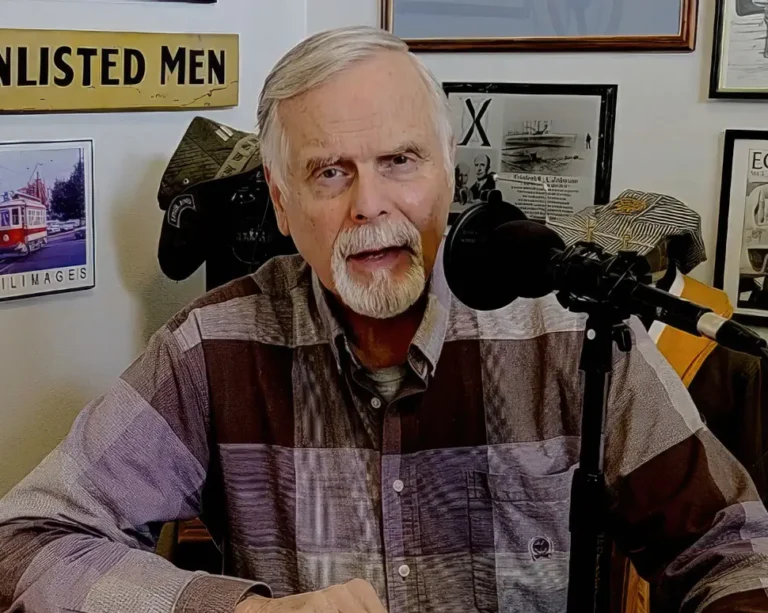
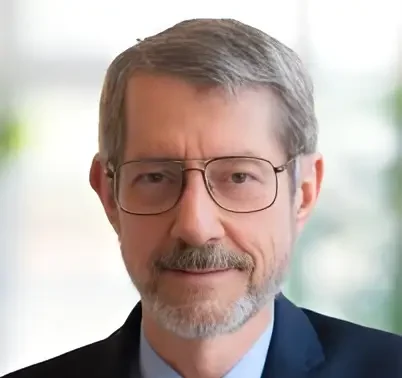
Bob Poole brings decades of expertise to the world of transportation and aviation policy. He earned both his B.S. and M.S. degrees in mechanical engineering from MIT before beginning his career as a systems analyst at Sikorsky Aircraft. After time at two California think tanks, he became the founding CEO of the Reason Foundation in 1978, a role he held until 2001. Since then, he has served as the Foundation’s Director of Transportation Policy.
Beyond leading major policy initiatives, Bob is a prolific writer. He researches and authors policy studies, edits two monthly e-newsletters focused on surface transportation and aviation, and contributes a monthly column on transportation policy for Public Works Financing.
In aviation, his work has centered on groundbreaking reforms such as airport privatization, public-private partnerships, runway congestion pricing, and air traffic control corporation models. Many of these ideas, though not widely adopted in the United States, have been successfully implemented across the globe.
Ethan Romanov: Having considered all of the tech outages and air traffic controller shortages at Newark, what long-term strategies should policymakers implement to prevent similar problems at other major airports?
Bob Poole: The two main problems at Newark (and many other FAA facilities) are too few controllers and aging, obsolete technology. One key problem was aging copper-wire telecommunications cables that failed; the same thing happened at Los Angeles TRACON in 2023 but got little publicity. They are being replaced by fiber-optic lines. The controller shortage is especially serious and represents years of FAA failure to ask Congress for enough funding to hire and train enough controllers to replace those retiring. The FAA’s staffing model failed to account for many predictable retirements in recent decades. Also, until recently, it had not allowed graduates of FAA-approved controller training at certain colleges and universities (Controller Training Initiative) to be excused from repeating this coursework at the FAA Academy. That has been fixed, but since on-the-job training at busy, complex facilities can take up to 4 or 5 years (and some wash out instead of getting certified), the FAA should be recruiting far more trainees than they historically have.
Ethan Romanov: Recently, the FAA has instated hourly caps on arrivals and departures at Newark and New York airports to manage congestion. Is this a sustainable solution, or is it just a temporary fix for deeper systemic problems?
Bob Poole: This is a poor solution for busy airports where airline demand can be more than their runways and ATC can handle. A better solution would be runway pricing that reflects the demand for landings and takeoffs at different times of day. This was legalized in the first decade of this century, but no airport has opted to use variable pricing. An FAA simulation (using airport and airline people) in 2004/05 modeled a pricing system for LaGuardia. Airlines adapted to it not only by moving some flights out of peak periods but also by “up-gauging”—e.g., replacing a regional jet with a single-aisle 737 or A-319. That way they could schedule fewer flights but serve more passengers.
Ethan Romanov: In your opinion, how much of Newark’s ATC issues can be fixed through policy reform versus technological improvements? Also, do you see one having a bigger impact over the other?
Bob Poole: Both are needed. FAA’s technology is aging and out-of-date. Because its funding comes from Congress and is based primarily on aviation user taxes (which Congress hates to increase), the FAA never requests such increases and is required by the White House Office of Management & Budget to request only as much spending as matches the user-tax revenues. FAA’s technology procurement is also seriously flawed, with vague requirements given to aerospace firms that develop overly complex, very expensive technology, and due to FAA’s limited funding, it buys the new equipment in small batches over 10 to 15 years, so most ATC facilities don’t get it for many years. Major policy changes in ATC provision worldwide over the last 30 years have separated ATC from the government transport agency (which does safety regulation) and converted ATC into a public utility (analogous to an electric utility, water utility, or toll road). Aviation users pay standardized ATC fees (sanctioned by the International Civil Aviation Authority). Those fees are paid directly to the ATC utility, which is generally able to increase them when necessary to pay for major improvements. The user-fee revenue stream is bondable, as in other utilities, so a tech upgrade can be acquired all at once and installed systemwide over a period of 1 or 2 years. Attempts to reform US ATC have been proposed for decades but never approved by Congress. The most recent effort got an ATC corporation bill through the House Transportation Committee in 2016-18 (twice, two slightly different bills) but went no further.
Ethan Romanov: Your background is incredibly diverse and well-rounded, spanning from engineering to policy and leadership at a major think tank. If you could go back in time and work on any past or present aviation project, which one would you choose and why?
Bob Poole: Working in some kind of full-time, organizational capacity on ATC reform might have led to successful transformation by this point in time, in keeping with global change.
Ethan Romanov: You mentioned that these FAA staffing models didn’t account for predictable retirements and modernization. How do you think this model should be reworked to better reflect future demand at airports like Newark?
Bob Poole: FAA’s staffing model does not realistically include the drop-out rate at every stage of the process of recruiting and training new controllers. This is documented in a new report from the National Academies of Science. It includes a graphic (unfortunately without numbers) showing all the stages at which would-be controllers either decide not to continue in the recruitment process or fail to meet standards in the curriculum or in on-the-job training at FAA facilities that control air traffic. This report also provides alarming statistics, such as that during the same time period (2010-2024) when air traffic has increased significantly, the controller workforce has declined by 13%. Also, the success rate of in-training controllers at the most complex facilities has declined from 81% in 2010 to 61% in 2019.
Ethan Romanov: You mentioned the FAA buys new technology in small batches over decades. Are there currently any efforts that you know of to speed up or modernize FAA’s procurement cycles?
Bob Poole: Alas, there are no current plans for change in the FAA’s procurement. The problem stems from the limited annual budget provided by Congress, which leads to buying and installing new tech over a decade or two. Most other large ATC providers get their funding directly from aviation user fees paid directly to the ATC provider. Canada and the UK systems, for example, can issue revenue bonds based on their revenue streams, which enables bulk purchases and installation of the new tech in most or all ATC facilities within a year or two. But Congress has never given FAA authority to issue bonds. (https://nationalacademies.org/atc-staffing)
Ethan Romanov: What advice do you have for the younger generation of students who are interested in entering the aviation industry?
Bob Poole: It’s a difficult question. The airline business has periodic ups and downs, and while airline deregulation has been great for passengers, it increased the risk for airlines, which had to learn how to compete. FAA, unless seriously reformed, would not be an exciting place to work but could be a starting point to equip a young person for a later aviation career. Start-up companies developing new kinds of aviation (eVTOL, etc.) would be higher-risk but good for career-building.