Insights on How the Air Force Executed a Very Complex, Secret Strike That Shocked Iran: An Interview with Chris Gordon
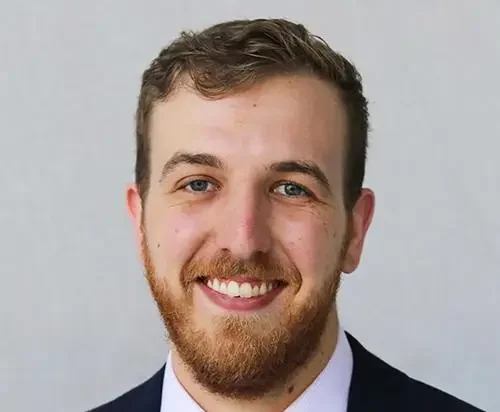
Chris Gordon is a defense and national security reporter for Air & Space Forces Magazine, where he covers U.S. Air Force operations, Pentagon policy, and major global military events. Throughout Gordon’s journalism career, he has covered everything from long-range strike missions to emerging weapons programs and the daily decisions shaping American aviation. He was first drawn into the world of writing through a blog he started for fun. It was a passion project that eventually grew into a full journalism career. Today, he brings that same curiosity and energy to reporting on the people, aircraft, and strategies that define modern defense.
Ethan Romanov: Midnight Hammer involved decoy routes and absolute secrecy. In your opinion, what aspect of the mission’s secrecy or deception stood out to you the most, and why was it so important to the mission’s success?
Chris Gordon: I’d say the fact that B-2s took off going west, which had all of us, including me, looking toward the Pacific, thinking those B-2s might be heading toward Iran, when in fact the actual mission went east out of Whiteman Air Force Base in Missouri, involving seven B-2s that ultimately struck Iran.
Ethan Romanov: Given that this attack took so many years to execute, which part of the operation was the biggest challenge? For example, was it getting the B-2s there, avoiding any Iranian defenses, coordinating all 125 aircraft, or making sure the bombs reached the correct depth?
Chris Gordon: Well, we know that this is a mission that they’ve practiced for years, and this was an existing plan. There has been a plan to strike Iranian nuclear facilities, one predating the Trump administration. So it was a well-rehearsed operation. I think the most surprising aspect was, in fact, that the U.S. probably did not plan to have to deal with as few threats as it ultimately did, because the Israelis decimated the Iranian air defenses during their air campaign before Midnight Hammer began. So in many ways, that’s actually the most surprising aspect, because the mission was predicated on having to fight through contested airspace. F-35s and other assets were involved in targeting those sites, but ultimately no U.S. aircraft were shot at, and much of that is due to the fact that Israel had already laid a foundation that made the operation less complicated to execute for the U.S. with less risk, but not with no risk.
Ethan Romanov: Overall, did this mission create a long-term setback for Iran’s nuclear ambitions or just a temporary disruption until they rebuild these sites deeper and more hidden?
Chris Gordon: There are a lot of unknowns. The sites have yet to be inspected by international observers and Iran’s future intentions are unclear. The Trump administration has said the strike set them back about one to two years in their overall program. Much of Iran’s highly enriched uranium is believed to be stored deep underground at Isfahan, a site which was ultimately hit by Tomahawks, but was not struck by the B-2s. Some experts suggest the highly enriched uranium is so deeply buried at Isfahan it probably could not have been struck by the B-2s and the bombs dropped during the mission, the Massive Ordinance Penetrator. We also don’t know how much highly enriched uranium the Iranians moved out of Fordow, the main target of the airstrikes. So, it’s a setback that seriously degraded the Iranian nuclear program, but it did not eliminate it. It remains to be seen what Iran’s calculations are in the region and with their nuclear program moving forward, as they now have fewer allies in the area with the downfall of the Assad regime, etc. Operation Midnight Hammer was a success regarding what airpower was supposed to do, which was for the seven B-2s to drop bombs on two uranium enrichment sites, mainly Fordow and also Natanz. It appears those sites were severely damaged or destroyed, according to American and Israeli officials. So, from an airpower perspective, it was successful. Regarding the overall Iranian nuclear program, we’ll have to see.
Ethan Romanov: This operation showed how many years of preparation and stealth come down to a single moment. What future technology do you think will change how these high-risk missions are carried out?
Chris Gordon: In the future, I think we have to acknowledge that should the U.S. face off against an adversary like China, high-risk missions will likely become more of the norm rather than the exception. Even recently the U.S. has faced threats from Houthi surface-to-air missiles; the Houthis shot down American drones, and the Iranians have shot down American drones as well. This operation required B-2s to go into Iran, into an air defense system that was already attacked by the Israelis, and it was escorted by, we know, F-35s that struck surface-to-air sites. So in the future, if you’re operating in an area inside the so-called first island chain in a Taiwan scenario, that’s the norm, not the one-off exception for a single-phase mission. In the future, should the U.S. face a peer competitor in a conflict, which is what the United States military is preparing for, that high risk will become a lot more than just a one-day thing, and it will be the fact of life. And that’s why, I think, you’ve seen the Air Force’s overall modernization efforts moving that way with F-47 dispersal techniques, the Agile Combat Employment doctrine, and the development of the B-21 Raider, which is a more advanced platform than the B-2, and uncrewed collaborative combat aircraft to take risk away from pilots and increase capacity. So I think in the future, it could be very challenging for the U.S. to execute a large-scale air campaign against a near-peer adversary that has advanced threats on a daily basis, rather than, to take nothing away from Operation Midnight Hammer, what was ultimately a temporary operation in which the U.S. could mass its forces. The U.S. could dictate, to some degree, when it was going to attack. It had the benefit of dictating the pace there and could mass forces versus having to sustain the campaign over many days. In the future, many experts say you need both high-end technology and a sufficient capacity of aircraft and munitions.
Ethan Romanov: Your reporting career is built on technical depth with storytelling in military aviation. What do you believe initially drew you to the defense and national security journalism world, and what keeps you motivated to continue this journey?
Chris Gordon: I used to cover hockey for 10 years, including writing for The New York Times as a stringer, but appearing in print. I did that for 10 years, but I never wanted to do that as an end game. I always actually wanted to do national security journalism, because I think it matters more. If you can inform people about what is going on in that space, it is important for people to know what their military is doing and what threats there are. So that is what motivates me as a journalist. I think it’s not easy work and not easy hours, but finding out the truth, reporting it responsibly, and informing people about national security affairs is something I believe is important for our society. That’s what drew me into it, and it’s also what motivates me to keep doing it. If there’s an interesting or newsworthy development that people should know about, I don’t begrudgingly cover it—I want to cover it. So that’s the answer to both aspects of your question.
Ethan Romanov: What advice do you have for the younger generation of students who are interested in entering national security and defense journalism?
Chris Gordon: I’d say write. It’s similar to the work you’re doing, having published work out there that you can see. In many ways, in journalism your résumé is not just your résumé; people can look for your byline. People can read thousands of articles judge you on your work. So I took a bit of an atypical path in that I started writing and covering hockey while in high school, which I think was a good path, because you can say, “Well, here’s what I’ve done. I would like to write for you.” And if someone looks at my work now, I can point people to it in terms of building credibility, building relationships, and the like. You will become a better writer simply by writing or, in the case of broadcast journalism or some of the new media journalism we see today, by just doing it, even from an outsider’s perspective. It’s simple advice and not particularly high-level, but there’s only so much you can go to school for or read about in terms of how to be a journalist. A lot of it is learned through experience.