The Loss of the World’s Biggest Plane: Frederick Johnsen on Its Global Significance
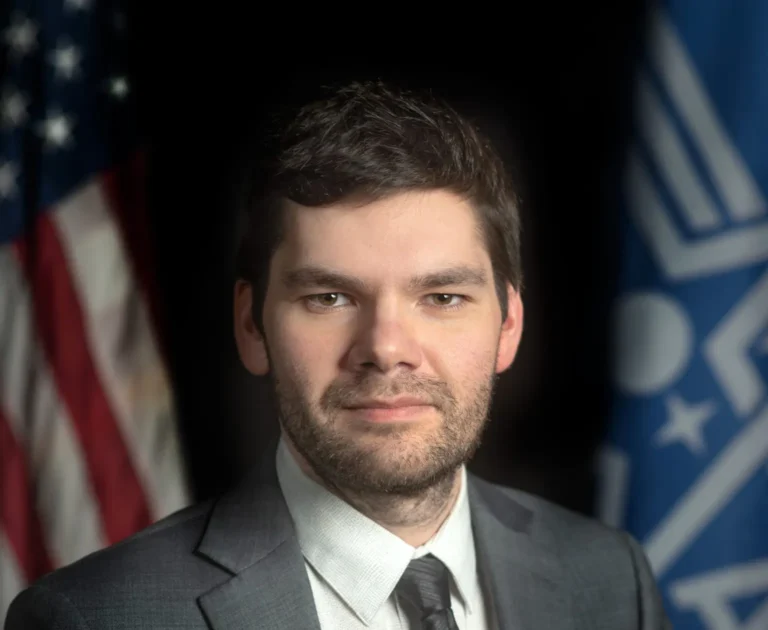
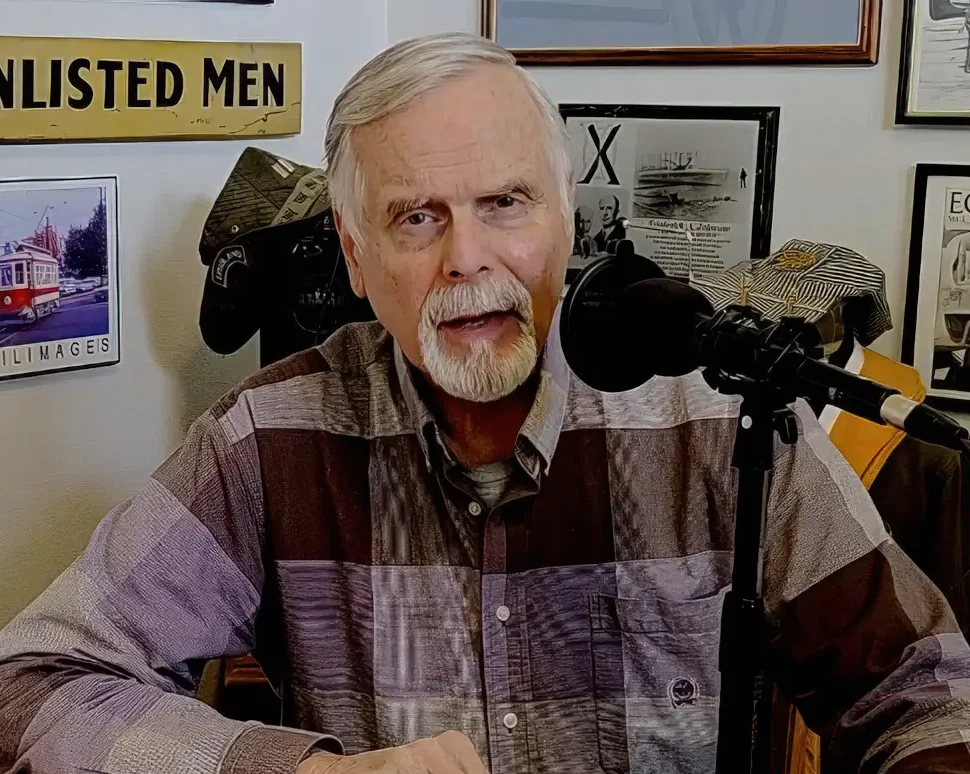
Frederick Johnsen is an aviation historian, author, and journalist whose work is rooted in the rich aerospace history of the Pacific Northwest. He previously served as a U.S. Air Force historian and museum curator, where he focused on preserving and interpreting military aviation history. Over the years, he has written numerous books and articles covering historic aircraft, airpower, and aerospace innovation. Today, he contributes regularly to General Aviation News and is the publisher for the Airailimages YouTube Channel, which produces in-depth historical aviation content, combining archival research, firsthand experience, and storytelling to make aviation history accessible to modern readers.
Ethan Romanov: You’ve spent many years in your career capturing, interpreting, and sharing aviation history. What personally drew you into the Antonov An-225 story?
Frederick Johnsen: I first became interested in the An-225 when it flew to the Abbotsford International Air Show in British Columbia in August of 1989. It was pretty impressive to see. It towered over everybody as it was parked on the ramp, and then when it flew, it was actually quite graceful. I did hear from a pilot friend of mine who was on the radio at the time that the crew took off with fairly minimal fuel so that they could be quite light and nimble as they flew. But nonetheless, it was very spectacular to see this huge six-engine jet flying.
Ethan Romanov: In your article, you highlight how the Antonov aircraft evolved from transporting a soviet space shuttle to a global cargo aircraft helping out with medical issues. How do you think that transformation shaped the world’s pride in the aircraft?
Frederick Johnsen: Years later, when I heard that it was being used out of Ukraine as a cargo hauler for commercial freight operations, I thought that was a clever use of the airplane and a little bit surprising, since there was only one in the world. Usually, it’s not feasible to keep only one aircraft of a type flying, but this one was unique because of its size and the kind of outsized and heavy cargo that it could carry. So then, when I heard that it had been demolished or very badly damaged by a Russian attack, I was very disappointed to hear that and curious to see what might happen to it in the future. From what I’ve seen of the An-225 in the post–Soviet Union era, the people of Ukraine are very proud that this was a product of Ukraine, and the fact that it was doing airlift missions, including a lot of humanitarian airlift, I think that made people even more proud of the aircraft. It wasn’t just a war machine. It wasn’t something diabolical from the Soviet Union. It was an airplane that was doing commercial work and doing good work.
Ethan Romanov: From everything you’ve covered about the losses of such important pieces in aviation history, what lessons do you think the aviation community should take from this tragic loss of the Mriya when it comes to preserving this valuable aircraft?
Frederick Johnsen: We’ve had other large, famous, and unique aircraft that have been destroyed from one cause or another over the years. Some have been damaged in crashes, some have been damaged in war, and others, like the huge XB-19 made by Douglas, which flew throughout World War II as a testbed, were never practical bombers but helped with design ideas for airliners long after. That airplane was summarily scrapped at Davis-Monthan Air Force Base after the war. It had been earmarked for the Air Force Museum, but that did not take place. So of course, I like to see unique airplanes such as the An-225 and other large aircraft saved, like the Spruce Goose in the museum in Oregon. I’m glad when they can be saved, and I’m sad when they are demolished.
Ethan Romanov: There has been a great amount of controversy about the rebuilding of the Antonov An-225. From both a historical and logistical perspective, do you think a rebuild could be possible and have the same emotional impact as the previous one had, or would it represent something new entirely?
Frederick Johnsen: I know there have been efforts or discussions in Ukraine about rebuilding the An-225 using the partially complete second airframe. I’ve recently heard, and I don’t know how accurate the story is, that that second airframe may also have been damaged in a more recent attack by Russia. So I don’t know what the situation is or whether we’ll ever see an An-225 fly again, but that would be pretty spectacular and good for the world. Given how heavily the An-225 was damaged, if it can be rebuilt, there will be a lot of new metal that goes into that airplane. I think it would be a combination of a rebirth of the airplane and the pride that brings, as well as a new sense of pride that the Ukrainians were not daunted by the potential loss of the airplane, but were able to come back. We haven’t heard whether they will be able to come back, but I hope so.
Ethan Romanov: As someone who has been surrounded by aircraft, museums, and airfields, is there one moment in your career that reminded you why you fell in love with aviation in the first place?
Frederick Johnsen: I’m fortunate that I have been around aviation since I was a small child. My father was an aeronautical engineer, and my mother worked at the Douglas Aircraft factory throughout World War II, so she had her own sense of aviation interest. That was something that was very strong in my family all of the time growing up. One of my first memories is from when I was about four years old in the 1950s. My dad took me down to the old Grand Central Airport in the Burbank-Glendale area of Southern California. There were rows of surplus military aircraft, including captured German and Japanese planes. My dad, who was an engineer, looked at them from an engineering standpoint, and as a four-year-old I was getting an engineering lecture, but it was still fascinating to spend that time with him looking at rare and exotic airplanes. Then he pointed to a Piper Cub and said, “You know, I can fly that.” That was the first time I realized that someone I knew personally was a pilot, and that really hooked me on aviation. From there, it just kept going. If it’s your passion, follow it and enjoy it.
Ethan Romanov: What advice do you have for the younger generation of students who are interested in entering the field of aviation literature?
Frederick Johnsen: I’m excited when I hear about young people getting interested in aviation writing careers. There are so many avenues—everything from writing books about specific aviation topics to magazine articles and, increasingly, online material. Photography and videography are also part of it, which I thoroughly enjoy. So there’s a whole lot to be done there. I advise young people to read, read, read, and watch and see what has already been done and learn from it. When I was coming up as a teenager, I read authors who were leaders of that era, people like Peter M. Bowers and William Green. They set a tone for research and interesting writing that really boosted my interest. Keep at it. You’ll keep honing your skills, and sooner or later it will click. There are many ways to do it—part-time while working another job or full-time. I spent many years as an Air Force historian, which allowed me to write about aviation topics daily while working on documentary history projects, such as management histories of the 62nd Military Airlift Wing at McChord Air Force Base. That role allowed me to travel the world on airlift missions while writing about them. There’s a lot of work involved and a lot of dedication, along with the potential for disappointment, but you have to keep at it. I encourage people with that interest to stay with it. Early in my career, I found that some organizations, museums, air shows, and blogs couldn’t afford to pay for writing or photography but were grateful if I published something. You might help produce a catalog or an air show program or work with a blog. You might not get paid initially, but you will get experience and exposure. That’s not bad either. It’s good to build credibility, because the longer you do this, the more your credibility grows.